
Gitanyow Title: 1910 to Present
“Recognize our title, and we will discuss how we share the wealth of our land.”
These words were written by Gitanyow’s first President Albert Williams in 1910, in a petition to Prime Minister Sir Wilfrid Laurier seeking recognition of Gitanyow’s Aboriginal Title.
More than a century later, they remain the foundation of Gitanyow’s approach to Aboriginal Title: recognition through agreement, dialogue, and shared prosperity.
Gitanyow Title: 1910 to Present
“Recognize our title, and we will discuss how we share the wealth of our land.”
These words were written by Gitanyow’s first President Albert Williams in 1910, in a petition to Prime Minister Sir Wilfrid Laurier seeking recognition of Gitanyow’s Aboriginal Title.
More than a century later, they remain the foundation of Gitanyow’s approach to Aboriginal Title: recognition through agreement, dialogue, and shared prosperity.
Why This Matters
Aboriginal Title is receiving renewed attention across British Columbia and Canada following recent court decisions. As a result, many people have questions and concerns about what Aboriginal Title means and what it could mean for their communities and private property.
This is not a new conversation for Gitanyow. For generations, Gitanyow has consistently sought the peaceful recognition of its Aboriginal Title through negotiation and agreement — providing clarity and predictability for everyone.
Respect for Property Owners
Gitanyow’s position is clear: No one will lose their home or their land.
Gitanyow knows the impacts of displacement and does not wish that experience on anyone. Recognition of Aboriginal Title is not about displacing people or taking away privately owned property. It is about recognizing the underlying Aboriginal Title that has always existed while building a future based on certainty, respect, collaboration, and shared prosperity.
This Is the Story of Gitanyow’s Title Journey
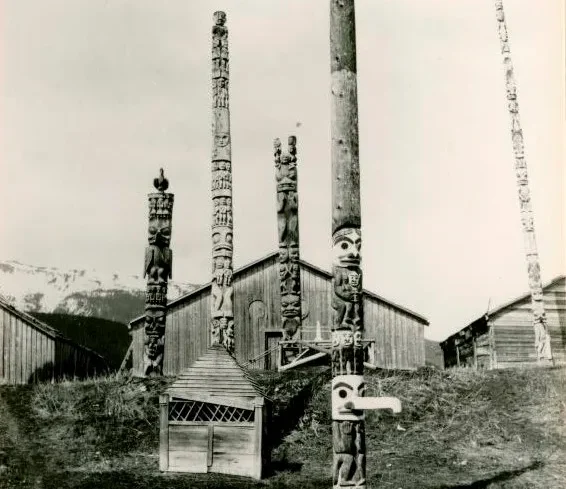
Git’mgan at the historic village of Gitanyow
We Are the Gitanyow
Our people have occupied our Lax’yip (Territory) for millennia. Our history, laws, and culture have been passed down from generation to generation through a rich oral tradition (Adawaak) that continues today.
Our Simgigyet (Hereditary Chiefs) and Sigidim Haa’nak’ (Matriarchs) are the living memory of our people, carrying forward our Ayookxw (Supreme Laws) and upholding Gwelx Ye’enst — the responsibility to pass on the Lax’yip in a sustainable manner from one generation to the next.
Gitanyow, formerly Kitwancool, is part of the larger Gitxsan Nation. Our Lax’yip spans approximately 6,200 square kilometers in northwestern British Columbia and is governed according to Gitanyow’s hereditary system which operates through consensus-based decision making.
Our Nation is made up of two Pdeek (Clans) and eight Wilp (House Groups). Each Wilp has defined territories, responsibilities, and hereditary leadership.
Together, We Have Stewarded These Lands and Waters for Time Immemorial
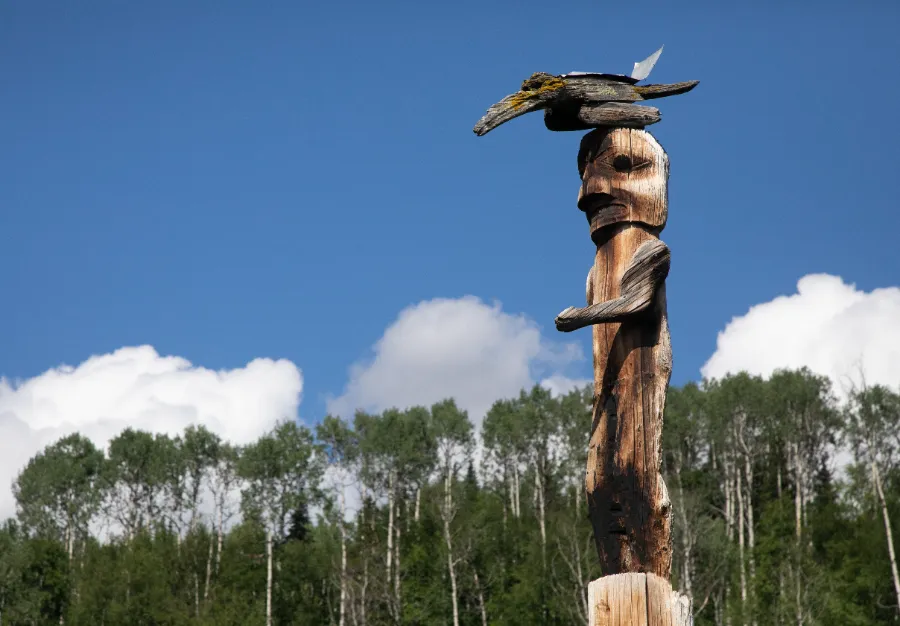
The historic village of Gitanyow has been lined with Git’mgan (Totem Poles) for generations. More than remarkable works of art, these towering poles are enduring records of Gitanyow history, governance, and Aboriginal Title.
Each Git’mgan tells the history of a Wilp, serving as living deeds to the land, ensuring that each generation understands its rights, responsibilities, and relationship to their Lax’yip.
For the Gitanyow, Aboriginal Title is not about creating something new. It is about seeking recognition of a relationship with the Lax’yip that has existed for thousands of years and has continued uninterrupted despite colonization, displacement, and decades of government policies designed to undermine Indigenous governance.
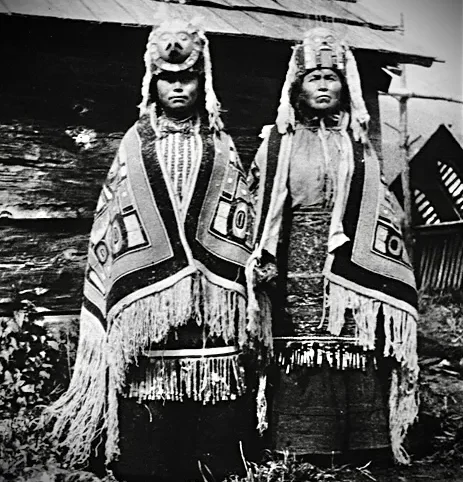
Sim’oogyet Gamlakyeltxw
1910 to Present
More Than a Century of Seeking Recognition
Gitanyow has never ceded, sold, or surrendered the Lax’yip. Since first contact in the late 1800s, each generation of Gitanyow leadership has pursued the recognition of its Aboriginal Title through dialogue, negotiation, and agreement.
The Petition
1910 – 1915
1910
President Albert Williams petitions Prime Minister Laurier to recognize Gitanyow’s Aboriginal Title, writing:
“Recognize our title, and we will discuss how we share the wealth of our land.”
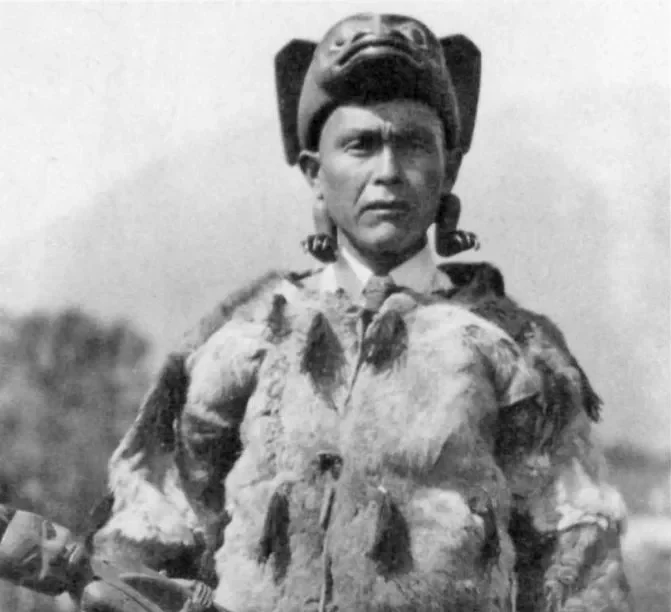
1915
Gitanyow Chiefs appeared before the McKenna-McBride Royal Commission, asserting Aboriginal Title to the entire Lax’yip and presenting a map that identified the same territorial boundaries Gitanyow continues to uphold today.
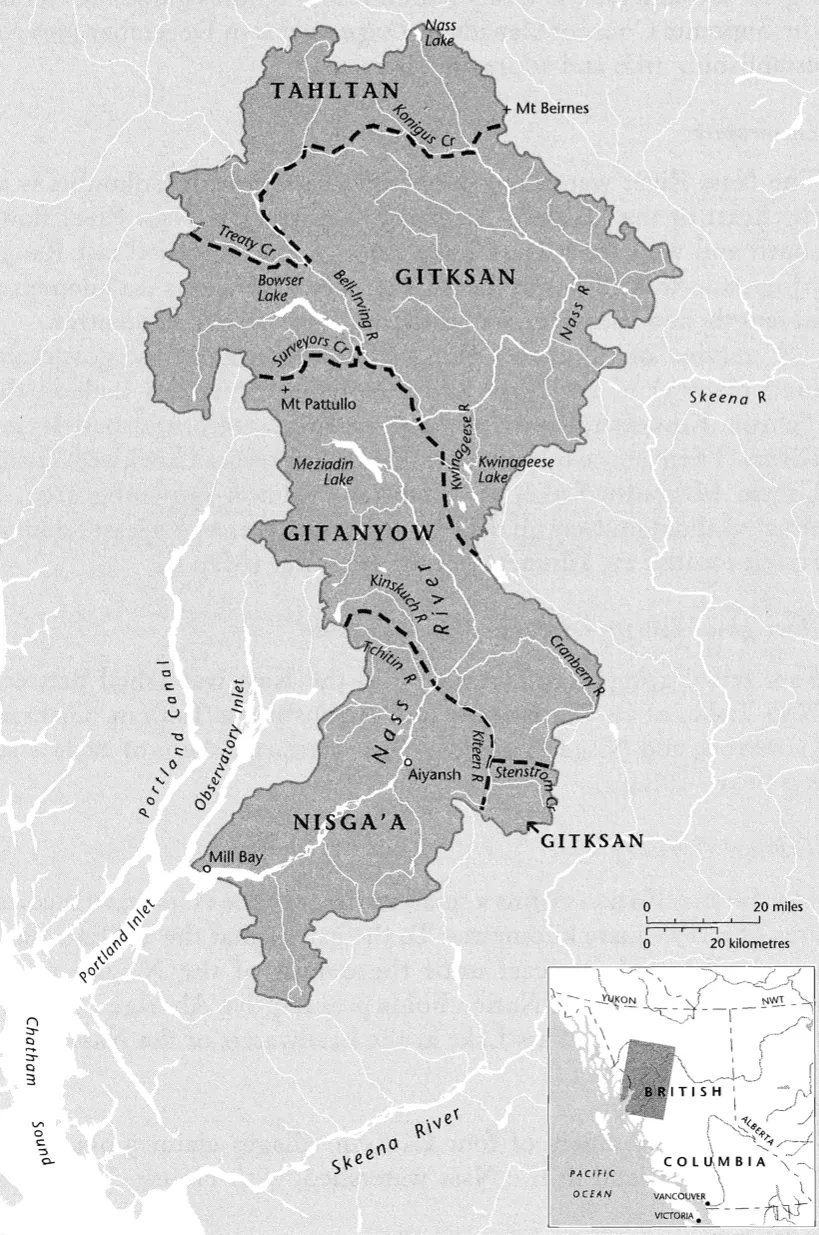
The middle Nass River, between the Tchitin and Gitxsits’uutsxwt, located downriver from the KinskuchRiver, about twenty-five kilometres north of Aiyansh.
Suppression & Persistence
1927 – 1980s
1927
As surveyors prepared to reduce Gitanyow to reserves, President Williams sent an urgent telegram to Canada’s Attorney General.
“The land surveyors prepare themselves to force us to abandon our mother land of Kitwancool and go into small reserves by the use of armed Mounted Police. We fear that our Mother land be our grave by force. How can your poor children be forced like this while we wish that our mother land of Kitwancool be used for public wealth.”
1927
Six Gitanyow Chiefs are imprisoned after forcing government surveyors from the Lax’yip. The day after arriving at Oakalla Prison, President Williams writes to the Attorney General, reaffirming Gitanyow’s commitment to resolving Aboriginal Title peacefully through agreement.
“They imprisoned our Chiefs and caged us inside this reserve.”
~ Sim’oogyet Gwass Hla’am 2015
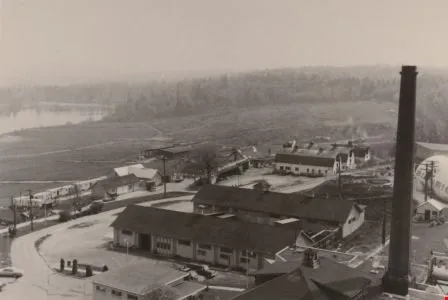
Oakalla Prison, Burnaby BC
1931
Following their release from jail, Gitanyow leadership formally presented a proposal to the Province seeking recognition of Title by Agreement, continuing its long-standing preference for agreement over conflict.
1935
After receiving no response from the Crown, Gitanyow sought recognition of its Aboriginal Title through the courts, attempting to appeal to the Exchequer Court of Canada. However, under the Indian Act at the time, First Nations were prohibited from raising funds to pursue land claims against the Crown, effectively preventing Gitanyow from advancing its case.
1930s – 1980s
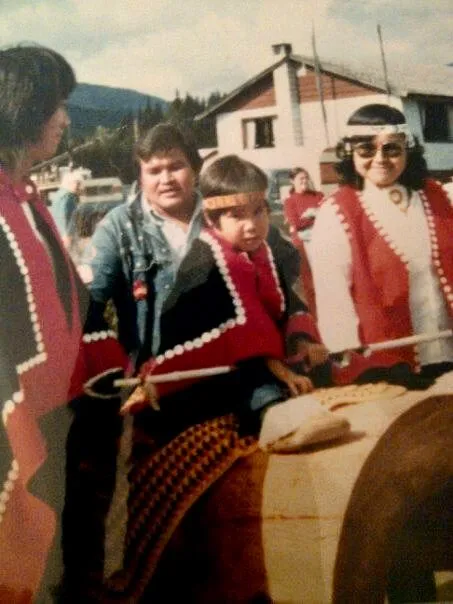
Despite decades of colonial policies, Gitanyow continued to govern by the Ayookxw and Lil’ligit (Feast system), stewarding the Lax’yip, harvesting traditional foods, and passing knowledge, laws, and responsibilities from one generation to the next.
Recognition in Law
1997 – 2003
1997
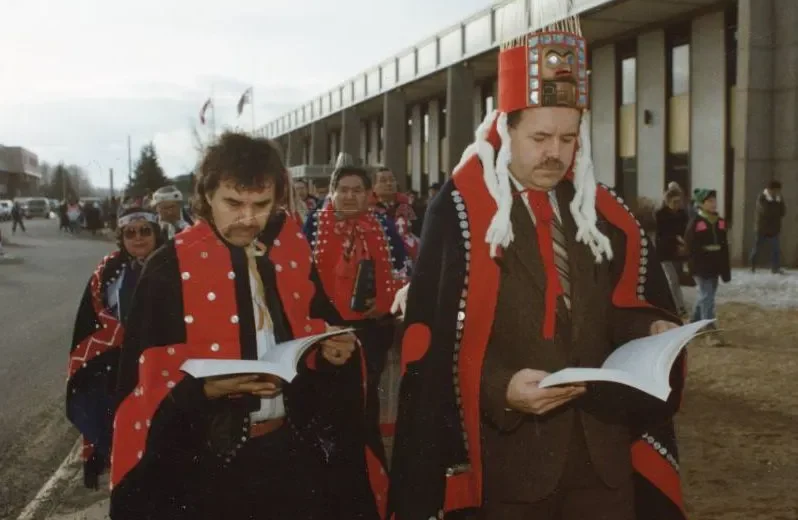
The historic Delgamuukw decision recognized that Aboriginal Title exists in Canadian law and affirmed the importance of Indigenous oral histories as evidence. The decision laid the legal foundation for future Aboriginal Title cases across British Columbia.
Glen Williams, now Sim’oogyet Malii and President, was the youngest witness to testify.
2003
Gitanyow filed its Aboriginal Title claim in the Supreme Court of British Columbia to preserve its rights while continuing to pursue a negotiated resolution.
Governing the Lax’yip
2009 – 2021
2009
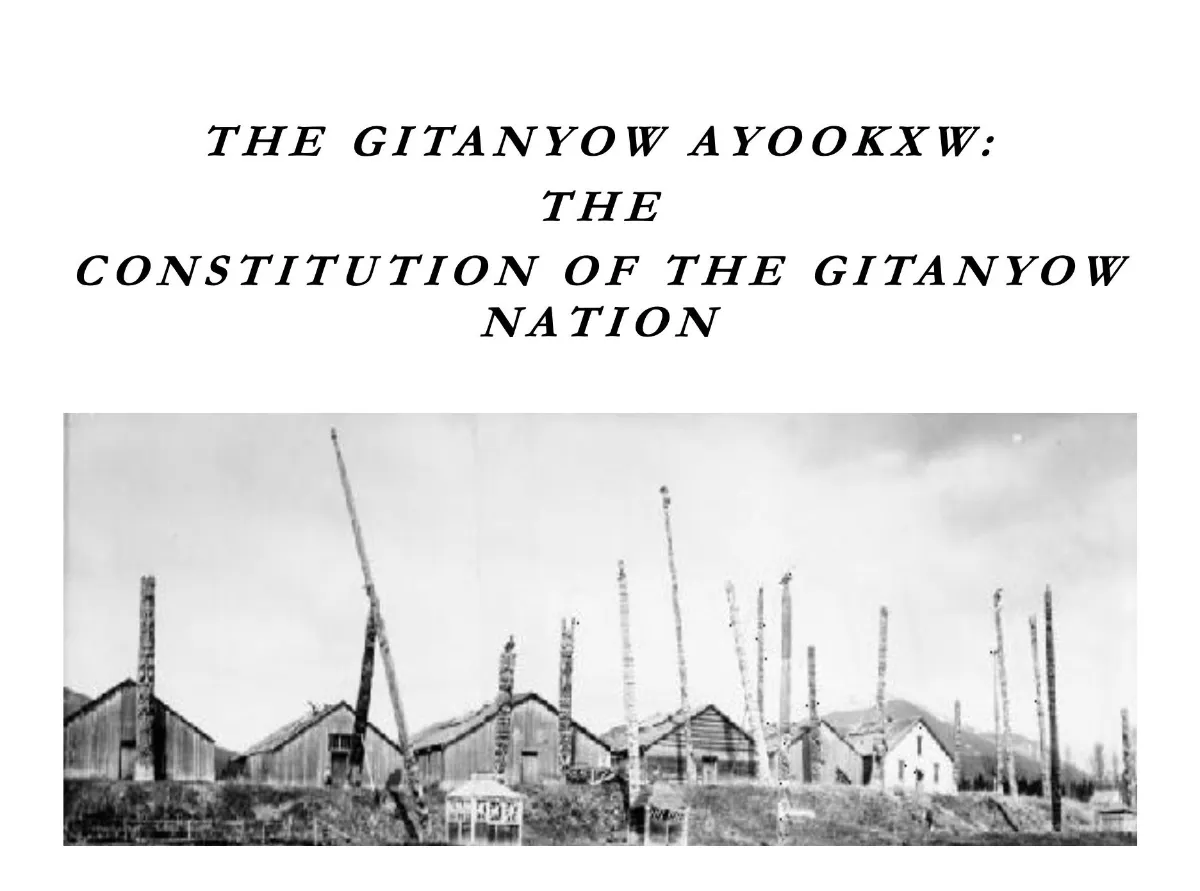
Gitanyow began implementing its Aboriginal Title in practice through modern governance tools by formally adopting the Gitanyow Ayookxw and the Constitution of the Gitanyow Nation. Together, they provide a modern legal framework for a governance system that has existed for thousands of years.
2012
Gitanyow implemented its comprehensive Land Use Plan, enabling the province and Gitanyow to identify, through a shared decision-making process, where and under what conditions development can proceed and where it may not, to protect Gitanyow values.
The plan, adopted under Gitanyow law and reflected in various ways in British Columbia’s policies, planning processes, and legislation, applies to all proponents who operate or wish to operate on the Lax’yip.
That shared decision-making approach has proven very effective. Over the past 14 years, 87% of decisions involving Gitanyow, government, and proponents have reached consensus.
The result is greater clarity and predictability for Gitanyow, governments, and industry. As one proponent described it:
“This is a developer’s dream — you’ve done all the hard work up front, and it accelerates decision-making.”
2014
After years of unsuccessful negotiations, Gitanyow resumed active litigation to seek a declaration of Aboriginal Title over the entire Lax’yip while continuing to express a preference for resolution through agreement.
2020
Building on its governance system and land-use framework, Gitanyow developed its own environmental assessment process — the Wilp Sustainability Assessment Process (WSAP) — grounded in Gitanyow Ayookxw and inherent jurisdiction.
WSAP is not a policy or advisory process — it is a formal system of assessment and decision-making carried out under Gitanyow law and authority, and has been applied to major projects, including mining proposals.
Feedback from proponents has been clear that the process is more efficient, more focused, and more effective than existing provincial environmental assessment processes.
2021
Gitanyow, British Columbia, and Canada signed the Gitanyow Governance Accord, establishing a path toward legal recognition of Gitanyow’s hereditary governance and a transition away from the Indian Act.
2021
Wilp Wii Litsxw established the Meziadin Indigenous Protected Area (MIPA) under Gitanyow Ayookxw to protect more than 50,000 hectares of critical salmon habitat for future generations.
Five years later, British Columbia advanced the Meziadin River Watershed Salmon Habitat Conservation Plan, taking steps to reflect in provincial law protections Gitanyow had already established under its own laws.

The Path Forward
2025 – present
2025
After decades of preparation, Gitanyow was scheduled to go to trial to seek a declaration of Aboriginal Title over the entire Lax’yip. The proceedings are currently on hold while the Supreme Court of Canada considers whether the Nisga’a Nation may participate in the case.
In the late 1880s through the early 1900s, many Gitanyow people moved to Nisga’a communities on the Nass River, drawn by missionaries and work opportunities. This led to a misconception of an “overlap” by which Nisga’a claimed part of Gitanyow territory.
In 2000, the Nisga’a Final Agreement, British Columbia’s first modern-day treaty, came into effect despite Gitanyow’s longstanding objections that it included approximately 84% of the Gitanyow Lax’yip.
The Supreme Court’s decision will determine the next step in Gitanyow’s Title case.
Present
Gitanyow’s vision is to welcome the world to the Lax’yip — to experience its beauty, learn about its governance and history, and participate in a shared future built on certainty, respect, and shared
prosperity.
Two Paths
Title Agreement Path
Certainty
Stability
Economic opportunity
Strong government-to-government relationships
Shared prosperity
Title Litigation Path
Project delays
Increased project costs
Years of legal proceedings
Gitanyow has always preferred the path of Title recognition through agreement, collaboration, and peace. The remaining question is whether Aboriginal Title is recognized through the courts or through a negotiated agreement that provides certainty, stability, and lasting benefits for everyone.